TLDR; Deer are most active on WNC roads from late October through November. If you hit one, get safe, document everything, and call it in. Whether the damage lands under comprehensive or collision, and what you pay out of pocket, depends on how the accident happened and on your deductibles. Check those now, before the rut starts.
Late October through November is peak season for deer crashes in North Carolina. It’s mating season, deer move more and pay less attention, and the timing overlaps with shorter days. Daylight saving time ends Sunday, November 1, which puts a lot of commutes into the dark in one week.
Across the state, NCDOT counted 26,143 state-reported animal-related car crashes in 2025, many of them involving deer.
In Transylvania and Henderson counties, you already know some of the hot spots. US-64 between Brevard and Rosman. US-276 heading into Pisgah Forest. NC-280 toward Mills River. Anywhere the road runs along a field edge or a creek at dusk.
Lowering the odds
- Watch hardest between dusk and dawn. That window accounts for most deer crashes.
- Use high beams when no one’s coming. Deer eyes reflect well before the body is visible.
- If you see one deer, slow down and look for more. They rarely travel alone.
- Brake firmly and stay in your lane. NCDOT’s guidance is to avoid swerving, since leaving the lane can put you into oncoming traffic, a ditch, or a tree.
- Deer whistles and horn blasts have little evidence behind them. Speed and attention do more.
If you hit a deer
- Pull over somewhere safe and turn on your hazards. On a 2-lane mountain road, that may mean driving a little farther to find a real shoulder, if the car is safe to drive.
- Check for injuries. Call 911 if anyone is hurt, if the car isn’t drivable, or if the deer or your vehicle is blocking the road.
- Leave the deer alone. An injured deer can kick hard. Tell the dispatcher and let law enforcement handle it.
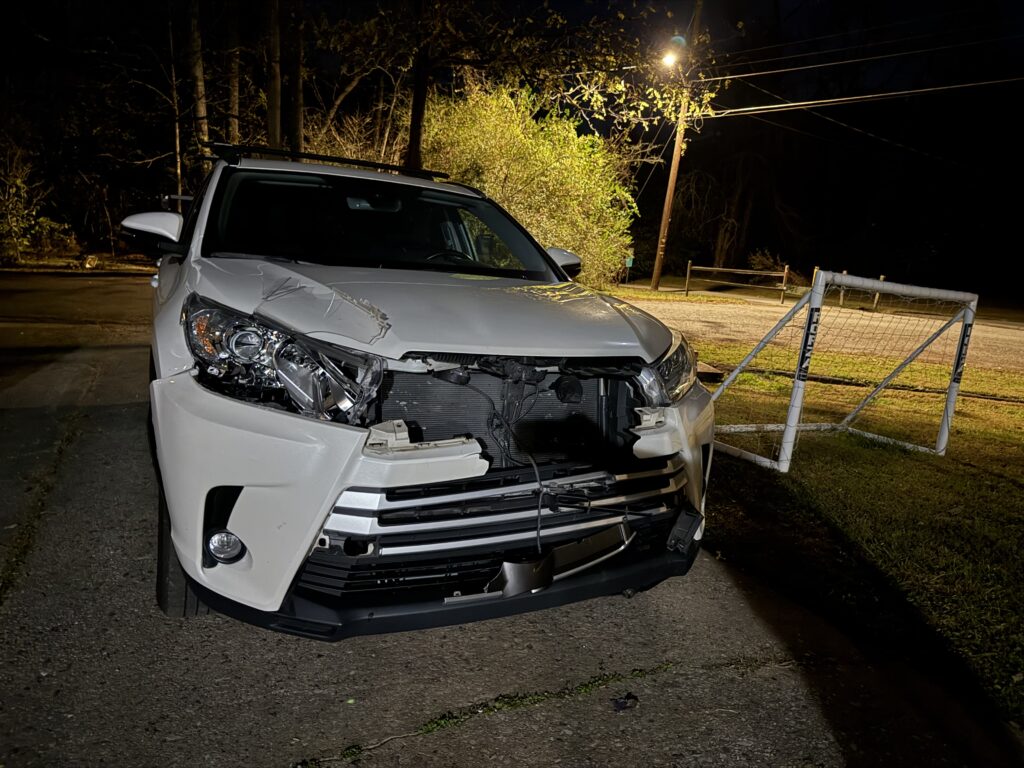
- Photograph everything before you move the car, if you can do it safely: the damage, the road, the deer, any hair or blood on the vehicle. Photos of the animal help show what happened.
- Ask about a crash report. Some claims move faster with one. Get the officer’s name and the report number if one is written.
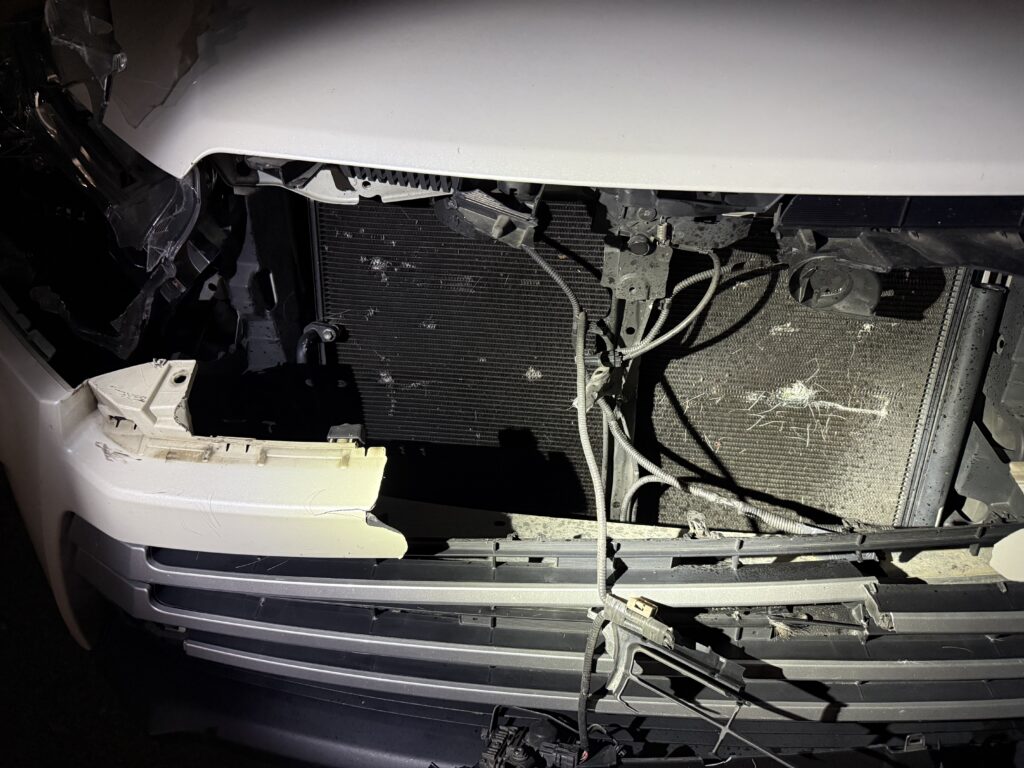
- Look before you drive. Check for leaking fluid, a dangling bumper, a cracked headlight, or a hood that won’t latch. Deer strikes often damage the radiator, and a car that starts fine can overheat a few miles later.
- Tell us and your carrier soon. Send photos and a short description of what happened.
How your policy may treat it
Hitting an animal is usually handled under comprehensive coverage (sometimes called “other than collision”). Collision coverage generally applies when you hit another vehicle or an object.
The details matter. If you swerve to miss a deer and hit a guardrail or a tree, that loss may be handled as a collision claim instead. Comprehensive and collision often carry different deductibles, so the same deer can cost you different amounts depending on what the car hit.
If you dropped comprehensive on an older vehicle, damage from a deer may not be covered at all. Don’t assume. Check your declarations page.
A few other coverages can affect how the week after a deer strike goes:
- Rental reimbursement, if you’d need a car while yours is in the shop. Body shops in the Brevard and Hendersonville area can get backed up in November.
- Towing and roadside assistance, if the car isn’t safe to drive.
- Glass coverage, since a deer that comes over the hood can take out the windshield.
Whether you have these, and at what level, varies by policy.
Where BIA starts
When our team quotes personal auto, we start from a $0 comprehensive deductible. If a client wants a higher deductible to lower premium costs, we note that choice in writing. October is the month that decision matters most, because deer season is one of the most common reasons a WNC driver files a comprehensive claim.
We know because we’ve been there. One of our team members hit a deer with her whole family in the car. It can be scary but being prepared with solid insurance is a huge help
Check yours this week
Text us at 828.759.5154 with a photo of your auto declarations page. We’ll reply in writing with your comprehensive and collision deductibles, whether you have rental and towing coverage, and anything we’d change before November.
Prefer email? Send the same thing to info@brevardinsurance.com. You can also call (828) 388-7490.